Jobsite Awards · buyer guide
Packing recognition pieces separately from site labels
For Jobsite Awards worldwide orders, recognition pieces and site labels can travel together while requiring very different next steps. Awards may need to remain presentable until a ceremony. Technical labels may need to be checked against a schedule and routed to authorized project staff. Begin the packing plan with those next actions rather than with a single total of engraved objects.
Reviewed 2026-09-05 · AI-assisted editorial review. General buying guidance; illustrative scenarios are not customer case studies. Images are AI-generated concepts.
Give each group its own internal packing reference. If they share an outer carton, the receiving contact should be able to identify the groups without opening every gift package or spreading technical labels across a presentation table. The distinction should survive the handoff from supplier to receiver to final user.
How do you connect packaging references to approved object records?
Use the same award and label references in the packing list that appear in the released order. A gift reference should connect to the approved recipient or crew message. A label reference should connect to the technical schedule. Avoid creating new informal names during packing that no one can reconcile with the proof set.
For repeated technical labels, record quantities by legend or approved group. For personalized awards, record the intended presentation allocation. A correct total in one group does not explain which item is missing from another. The packing list should support a precise discrepancy report rather than a statement that the box seems short.


How do you choose internal groups around real destinations?
Ask the project coordinator which site, office or event group will receive each item. Labels for one work area should be distinguishable from those for another, especially when their visible text is similar. Awards should be grouped according to the organizer's distribution plan, not automatically by the order in an employee export.
If one person receives both a personal award and a technical-label package as part of their job, keep those functions distinct. The personal item should not become part of an installation kit, and the technical group should not be mistaken for a gift. Clear references let the same receiver handle both without merging their acceptance responsibilities.
Illustrative example: How do nine recognition pieces and twenty-four labels total thirty-three?
Imagine a fictional shipment with nine recognition pieces and twenty-four technical labels. The labels consist of three approved groups with eight copies each. Nine plus twenty-four equals thirty-three ordered pieces. The bulk-tag calculator example uses Recognition pieces | 9 | 1 and Site label groups | 3 | 8, with no spares.
The worksheet proposes one recognition packing group and three label packing groups. It does not prescribe the actual carton count or protective materials. Those should be confirmed by the maker for the physical items. The thirty-three-piece total is independent of whether the shipment uses one outer carton or several.
If the organizer splits the nine awards between two ceremonies, the object count stays nine. The distribution allocation changes. If the technical owner adds one approved replacement label, the physical count becomes thirty-four. Keeping quantity and packing allocation in separate fields makes both changes easy to review.


How do you ask the maker to confirm protection and package scope?
Describe the actual handling path, including any internal transfer after delivery and the time before presentation. Ask the maker to propose suitable packaging for the approved objects. Do not assume decorative gift packaging is also the complete transit protection, or that a label bundle can safely share unseparated space with a finished award.
Confirm what packaging is included in the quote and which special requests add scope. A photograph of a boxed concept does not establish custom inserts, individual wrapping or reusable transport cases. The purchasing record should describe the accepted arrangement clearly enough that receiving staff know what to expect.
Count recognition and technical-label groups
Load the fictional worked example, then replace every assumption with your approved project inputs.
Method: Multiply each entered group by pieces per group and add explicit spares. Carton count, protection and technical acceptance are not calculated.
Build your plan
Use one row per tag type. For example: Valve labels | 20 | 2. Material, dimensions, legend text and mounting belong in the final tag schedule.
Use the article’s example files
Fictional example rows show how to separate physical quantities, wording and approval references. Replace them with your project schedule. HOLD and SAMPLE entries are not production instructions.
How do you make the receiving sequence practical?
Identify the person who will accept the outer shipment and the owners who will check each internal group. The first receiver should compare the carton references and visible condition with the delivery record, then route the contents through the agreed project process. Detailed technical acceptance belongs with the responsible label reviewer.
For awards, arrange a text and presentation check early enough for the organizer to report discrepancies before the event. Avoid leaving every package sealed until the ceremony solely because it looks neatly wrapped. Ask the maker how the pieces can be inspected and reclosed without undermining the intended presentation.
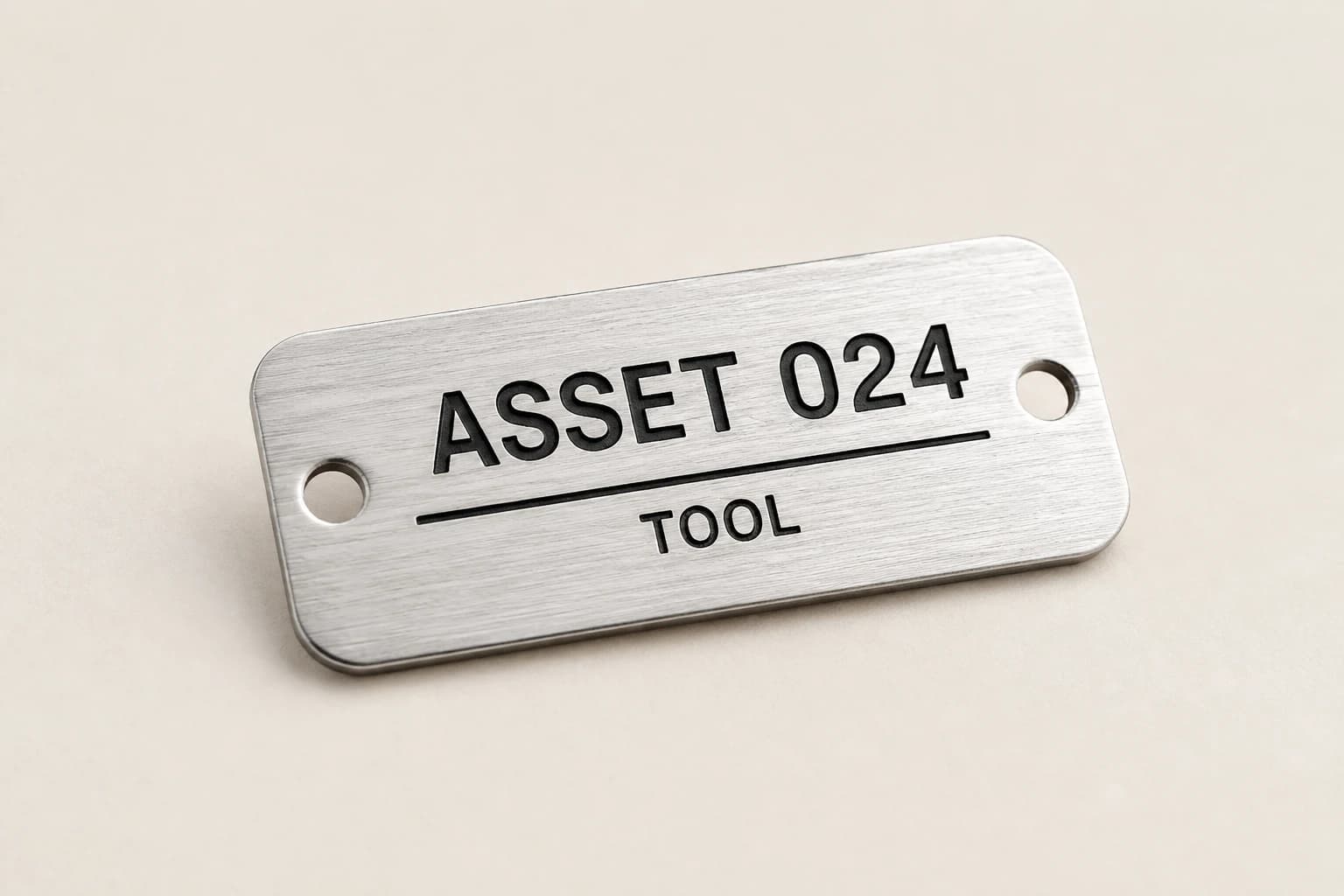
How do you keep shortages and corrections tied to the right group?
If a package is short, report the group reference, expected quantity, received quantity and affected object IDs. A total shortage of one is less useful than identifying that one approved label legend is missing or one personalized award did not arrive.
Do not borrow a technical spare from another location merely to make a count balance. The legend or physical specification may differ. Likewise, an unpersonalized award is not automatically an acceptable substitute for a named recipient's piece. Ask the appropriate source owner to approve the remedy and the maker to confirm its actual scope and timing.
How do you control storage between delivery and use?
Agree where recognition pieces will be kept until the event and who can access the distribution list. Keep them separate from the technical-label staging area so they are not opened, reassigned or transported as operational stock. The project should determine the actual storage conditions appropriate to the objects using the maker's information.
For technical labels, preserve the approved grouping and references until the responsible staff use them. A loose collection of similar-looking labels can lose its connection to the schedule. The packing plan should make it easier to keep that relationship intact, not require someone to reconstruct it from memory at the point of use.
How do you update the handoff record after distribution?
After the awards are presented, record which group was completed and who holds any unpresented pieces. After the labels reach the responsible project owner, record the accepted transfer without implying installation or technical completion unless that has actually been verified through the project process.
Keep any remaining spares identified by their approved legend or gift status. For the next order, use the retained references to distinguish a replacement, an additional copy and a new design. The mixed shipment is complete only when each object group has reached its intended next owner with a usable record of what it contains.
How do you reconcile a split shipment without duplicating the order?
If labels need to dispatch before the recognition pieces, keep one master quantity schedule with separate shipment allocations. Mark each group as planned, dispatched or received using the actual confirmed state. Do not copy the full order into both shipment lists and rely on a note to explain that only part should travel.
Ask the maker to identify which references are included in each dispatch and which remain outstanding. The receiving contact can then report a missing item against the correct shipment rather than treating every undelivered award as a shortage in the label carton.
When the later recognition shipment arrives, reconcile it with the remaining allocation. A split delivery changes the transport plan, not the approved number of objects. Any added replacement, spare or presentation copy needs its own authorized quantity change so the final purchase record remains understandable.
How do you close two different handoffs?
The technical label group should reach the person responsible for its accepted destination and further project process. The recognition group should reach the organizer or presenter who will distribute the gifts. A carrier delivery to a central address does not complete both handoffs.
Keep a limited record of the object references, packing groups and named receiving owners. The outside of a carton does not need personal recognition stories or sensitive technical detail. Use the project’s own information-handling process to decide what belongs on external labels and what stays in the enclosed or restricted schedule.
Which option fits this order?
Group recognition pieces for presentation and technical labels for their approved project destinations, even when one outer shipment contains both. The fictional thirty-three-piece total does not determine carton count. Compare internal references, protection and receiving ownership so each group reaches its intended next step without mixing personal gifts with operational label stock.
| Option | Useful when | Scope to resolve |
|---|---|---|
| Recognition group | Objects need a personal or crew presentation with approved messages. | Recipient allocation, inspection, presentation packaging and organizer handoff. Viking Awards discusses dates among optional engraving elements. |
| Technical-label group | Approved identifiers must reach the responsible project destination. | Legend references, quantity by group and technical receiving ownership. |
| Shared outer shipment | A common delivery address is practical for both. | Internal separation, carton references and clear onward distribution responsibilities. |
Sources: Viking Awards and Engraving: Award Engraving Wording Guide & Examples
What should buyers confirm before ordering?
Mixed shipments need separate object counts, packing allocations and onward owners. Cost depends on the actual packaging and destination scope rather than the calculator total alone. These answers explain partial deliveries, event splits and receiving evidence so carrier arrival is not mistaken for completed presentation or verified technical installation.
What can separate packing groups add to the quote?
Jobsite Awards quotes should identify the actual protection, internal grouping, labels and delivery arrangement requested for awards and site identifiers. Docking or event deadlines, multiple destinations and special presentation packaging can change the scope. Ask for a complete packing proposal rather than assuming one outer shipment includes every onward handoff or custom internal package.
Does splitting awards between events increase the piece count?
Not unless additional objects are approved. It changes the packing and distribution allocation, which should be recorded separately from quantity. Keep the same object references while updating each group’s destination or presenter. Manufacturing quantity changes only when an additional or replacement physical piece is approved, not when the organizer reorganizes the event list.
Can the supplier choose the number of cartons?
Ask for a packaging proposal suited to the actual objects and handling path. The planner counts entered pieces, not cartons or protective materials. Describe the actual objects and planned handling route so the maker can propose protection. The calculator’s piece total cannot determine carton dimensions, dividers or the suitability of presentation packaging for transit.
Is carrier delivery proof that the awards were presented?
No. Record the later organizer or recipient handoff separately. Technical installation likewise requires its own project evidence. Name the later owner responsible for each group and record the actual handoff. A technical receiving transfer also should not be described as completed installation unless the project has separately verified that outcome.
How should a partial shipment be recorded?
Keep one approved quantity schedule with separate dispatch allocations and actual status for each group. The maker should identify what shipped and what remains outstanding. A later award carton should reconcile to the remaining scope, not duplicate the full original list or rely on an informal note explaining which pieces were already sent.
Sources and scope
The sources below support the cited technical details. The ordering workflows are editorial recommendations. Your project specification, price and schedule are established in the written quote and approved proof.
- Viking Awards and Engraving: Award Engraving Wording Guide & Examples · checked 2026-09-05
Which buying guide should you read next?
All buying guidesCoordinate the purchase while keeping recognition awards and equipment identifiers in separate technical, wording and receiving workflows.
Separate the number of distinct label designs from the number of physical copies so artwork review and production quantities stay accurate.